The graphics card market is entering 2026 on a turbulent note. After a period of stabilization in 2025, where many gaming GPUs finally reached their Manufacturer’s Suggested Retail Price (MSRP), reports from supply chain insiders and industry analysts now indicate that both AMD and NVIDIA are gearing up for significant price hikes starting this January. These price increases are expected to affect both mid-range and high-end models, leaving gamers, content creators, and tech enthusiasts with fewer options for affordable upgrades.
In this article, we’ll break down why these price hikes are happening, what you can expect in the coming months, and how this will impact the consumer GPU market.
Why Prices Are Skyrocketing: The Drivers Behind the Surge
The primary cause of the upcoming price hikes isn’t a shortage of GPU chips themselves, but a critical shortage of DRAM—specifically the GDDR6 and GDDR7 memory that powers these GPUs.
Here’s a closer look at the key reasons driving this dramatic increase:
1. The “AI Gobble”: High Demand for Memory from Data Centers
One of the most significant factors is the growing demand for High Bandwidth Memory (HBM) in artificial intelligence (AI) and machine learning applications. Large tech companies, particularly those building AI data centers, have ramped up their usage of memory chips. Major memory manufacturers such as Samsung, SK Hynix, and Micron are allocating more of their production capacity toward HBM to meet the insatiable demand of AI data centers.
This shift in production priorities has caused a massive drain on the memory supply available for consumer-grade products like gaming GPUs. As a result, there’s now a severe shortage of GDDR6 and GDDR7 chips—key components for modern graphics cards.
2. Contract Resets: Rising Prices for Memory Chips
Another contributing factor is the expiration of many long-term memory contracts between GPU manufacturers and their suppliers. These contracts, which had previously locked in memory prices at fixed rates, expired at the end of 2025. As a result, AMD and NVIDIA are now facing significantly higher memory prices when negotiating new contracts for 2026. Sources suggest that new memory contracts could cost 3 to 4 times higher than the prices seen in previous years, significantly impacting the cost of building and producing GPUs.
3. Production Cuts: Artificial Scarcity to Drive Prices Up
Finally, rumors circulating in online forums such as Board Channels suggest that NVIDIA may cut production of its upcoming RTX 50-series GPUs by 30–40% during the first half of 2026. This would likely be a strategic move to help manage the rising costs of memory and other components, creating an artificial scarcity in the market. With fewer units available, demand will drive retail prices higher.
When Will Prices Start Rising?
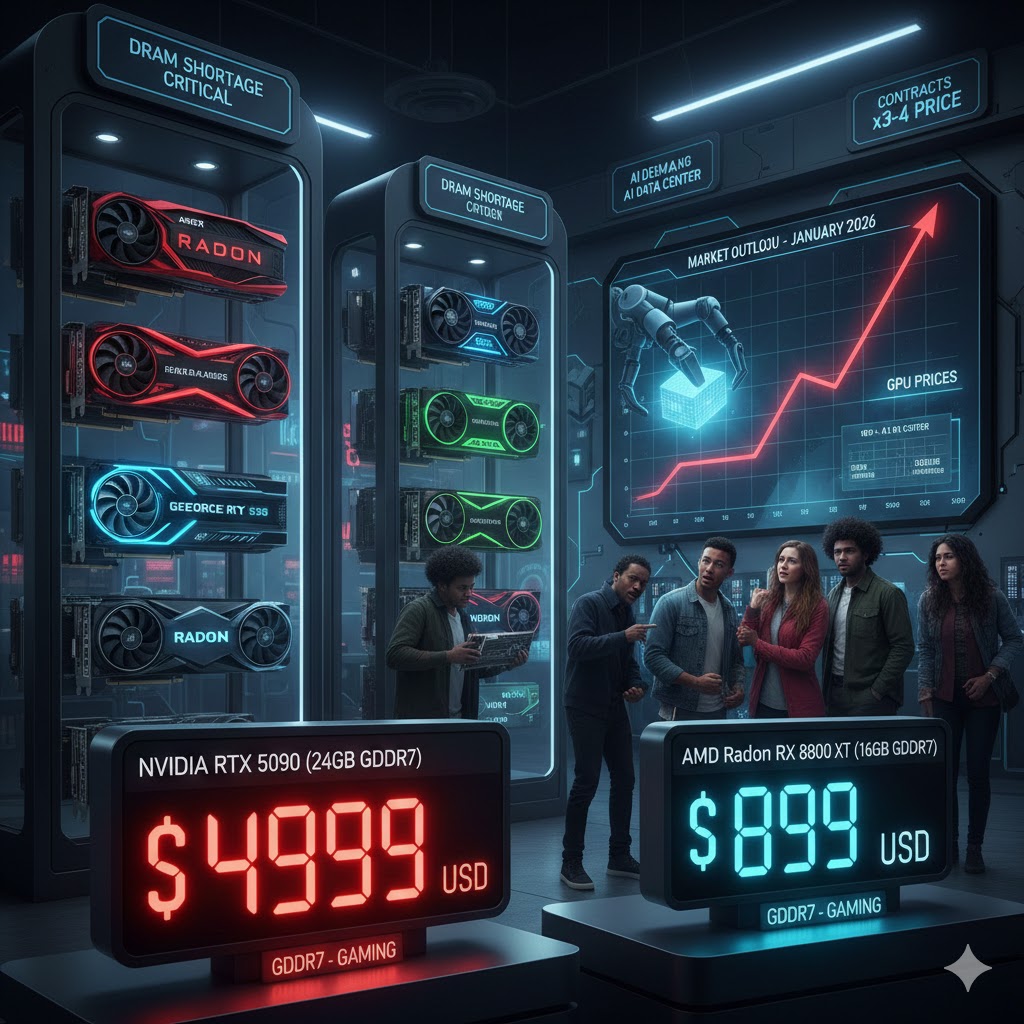
The price hikes will likely occur in phases, with AMD being the first to implement changes. Here’s a breakdown of the expected timeline and potential impact:
| Manufacturer | Expected Start | Potential Impact |
|---|---|---|
| AMD (Radeon) | January 2026 | Initial hikes of $20–$40 on mid-range cards; potentially higher on 16GB+ models. |
| NVIDIA (GeForce) | February 2026 | Phased increases; flagship RTX 5090 rumored to reach nearly $5,000 for premium versions. |
Impact by VRAM Capacity
Since memory is the bottleneck driving these price hikes, graphics cards with higher VRAM (Video RAM) will experience the steepest price increases.
- 8GB VRAM Cards: Expect an initial price increase of approximately $20–$40.
- 16GB+ VRAM Cards: These will likely see larger price hikes, possibly as high as $80–$100 initially, with adjustments likely to continue throughout the first quarter of 2026.
It’s clear that if you’re after a higher-end GPU with 16GB or more of memory, the upcoming months may not offer much relief in terms of pricing.
What Does This Mean for You?
For gamers and enthusiasts hoping to pick up a GPU at or near MSRP, the outlook for 2026 looks grim.
If you’ve been waiting for mid-generation refreshes or discounted “Super” versions of the RTX 50-series (like the rumored RTX 5090 Super), you might be in for a tough reality. Insiders suggest that NVIDIA may delay or even cancel these refreshes to avoid launching new models into a market already experiencing high inflation. With production cuts on the horizon, the supply of new GPUs will be limited.
Expert Tip: Buy Now Before Prices Rise
If you’re considering upgrading your graphics card, experts advise that now may be your last chance to grab a GPU at or near MSRP. AIB (Add-in-Board) partners, such as ASUS, MSI, and Gigabyte, have reportedly been warned by manufacturers to stock up on GPUs before the price hikes take full effect in January 2026.
This could be a good opportunity to pick up a graphics card at a lower price before the price increases become widespread. Be sure to act fast, as once these hikes hit, you may be paying significantly more for the same card.
Wrapping Up: Brace Yourself for Higher Prices in 2026
In conclusion, while 2025 saw a brief period of price stabilization, the GPU market in 2026 is set to face turbulent waters. The shortage of GDDR6 and GDDR7 memory, combined with rising demand from AI applications and the expiration of long-term contracts, is pushing the cost of producing and selling gaming GPUs higher.
If you’re in the market for a new graphics card, it’s a good idea to buy sooner rather than later—especially if you want to avoid the upcoming price hikes. Unfortunately, for those hoping to grab discounts or see price reductions, the news doesn’t look promising.
As always, stay tuned to the latest reports, and keep an eye out for deals before the prices climb even higher. The next few months will undoubtedly be crucial for gamers and PC enthusiasts alike.