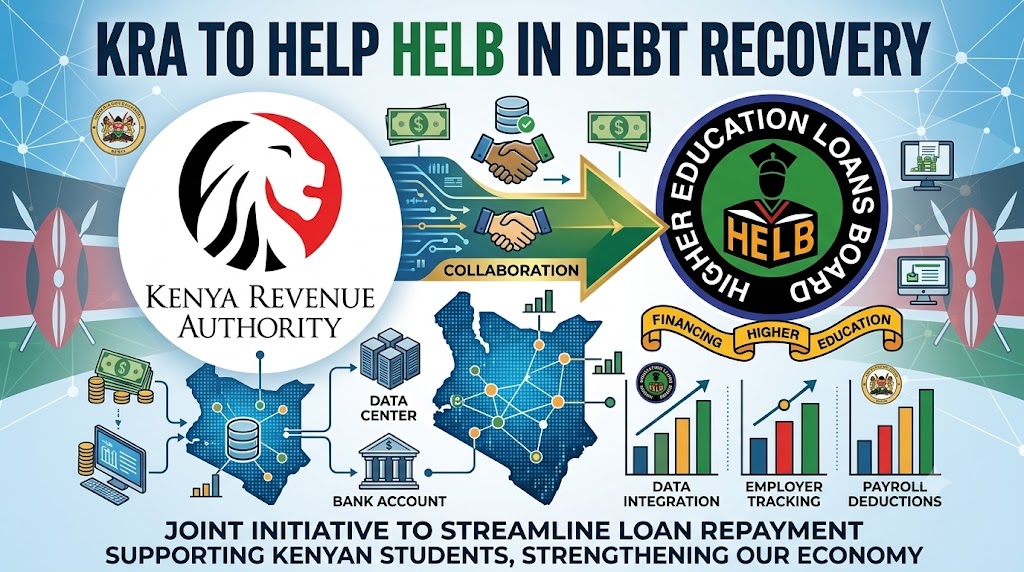
The Higher Education Loans Board (HELB) is strengthening efforts to recover billions of shillings owed by former students who have not been repaying their loans. One of the latest strategies is increased collaboration with the Kenya Revenue Authority (KRA) to help trace borrowers and improve debt recovery.
This move has generated significant interest among graduates, employers, and loan beneficiaries across Kenya. Many borrowers are asking:
- Will KRA deduct money directly from my salary?
- Who will be affected?
- How will KRA help HELB?
- Can I negotiate my repayments?
In this guide, we explain everything you need to know.
What is HELB?
The Higher Education Loans Board (HELB) is a Kenyan state corporation established to provide affordable loans, bursaries, and scholarships to students pursuing higher education.
Unlike grants, HELB loans must be repaid after graduation according to the agreed repayment terms.
Loan repayments help finance future students, making HELB a revolving fund.
Why is HELB Working with KRA?
Over the years, HELB has experienced increasing challenges recovering unpaid loans from thousands of graduates.
Many borrowers:
- Changed jobs without updating HELB
- Moved abroad
- Became self-employed
- Ignored repayment notices
- Defaulted for several years
The unpaid loans amount to billions of Kenyan shillings, reducing the amount available for new students.
Working with KRA enables HELB to improve borrower identification using available tax information and employment records where legally permitted.
How Will KRA Help HELB Recover Loan Debts?
The collaboration is expected to improve debt recovery through several mechanisms.
1. Identifying Borrowers
KRA maintains taxpayer records linked to:
- KRA PIN
- Employment information
- Employer details
- Income declarations
This information can help HELB identify borrowers who have income but are not servicing their loans.
2. Matching Employment Records
Graduates who are employed usually require:
- KRA PIN
- PAYE registration
- Tax compliance
Matching these records with HELB databases makes it easier to identify loan defaulters.
3. Improving Compliance
Knowing that government agencies can share information within the law encourages borrowers to regularize their HELB accounts instead of waiting for enforcement measures.
4. Supporting Debt Collection
Rather than relying solely on reminders and notices, HELB can use verified employment and tax information to contact borrowers and facilitate repayment arrangements.
Who Will Be Affected?
The initiative mainly targets:
- Graduates with outstanding HELB loans
- Borrowers who have never started repayment
- Long-term defaulters
- Borrowers who ignored repayment notices
- Individuals earning income but not servicing their loans
Borrowers who are already making regular repayments are generally not the focus of enforcement efforts.
Will KRA Deduct Money Directly From My Salary?
Many Kenyans are concerned about automatic deductions.
In practice, HELB loan repayments are typically made through employer deductions for salaried employees or through self-remittance for self-employed borrowers. Any additional enforcement actions would need to follow the applicable legal and administrative procedures.
If you have fallen behind on repayments, it is advisable to contact HELB promptly to discuss your account instead of waiting for recovery measures.
Importance of HELB Loan Recovery
Recovering unpaid loans benefits the entire higher education system.
1. More Students Receive Loans
Recovered funds are recycled to support new university and TVET students.
Without repayments, fewer students can benefit.
2. Promotes Responsible Borrowing
Repaying HELB loans demonstrates financial responsibility and helps maintain the sustainability of the student loan program.
3. Supports Government Education Funding
Loan recoveries reduce pressure on public finances and help ensure the continuity of higher education financing.
4. Ensures Fairness
Borrowers who faithfully repay their loans should not carry the burden while others default without consequence.
What Should HELB Defaulters Do?
If you have an outstanding HELB loan:
Check Your Loan Balance
Log in to your HELB account and verify:
- Outstanding balance
- Monthly repayment
- Any penalties or arrears
Start Repayment Immediately
Even if you cannot clear the full amount, making consistent repayments demonstrates good faith and helps reduce your balance over time.
Update Your Details
Ensure HELB has your current:
- Phone number
- Email address
- Employer information
- Postal address
Keeping your records up to date helps you receive important notifications.
Contact HELB if You Face Financial Challenges
If you are unemployed or experiencing financial hardship, communicate with HELB. They may provide guidance on available repayment options or arrangements.
Consequences of Defaulting on HELB Loans
Persistent failure to repay may result in consequences permitted under Kenyan law and HELB’s recovery processes, including:
- Accumulation of penalties or interest where applicable
- Debt recovery actions
- Increased follow-up by collection agencies or government institutions
- Challenges obtaining certain financial services where loan obligations are considered
Borrowers should review the current HELB terms and seek clarification directly from HELB if they are unsure of their obligations.
Frequently Asked Questions
Is HELB working with KRA?
Yes. HELB has been collaborating with KRA to improve identification of borrowers and strengthen student loan recovery efforts.
Does this affect all graduates?
No.
The focus is primarily on borrowers who have outstanding HELB loan obligations.
What if I already pay my HELB loan?
If you are making regular repayments, you should continue doing so according to your repayment schedule.
Can unemployed graduates be forced to pay immediately?
Borrowers facing financial hardship should contact HELB as soon as possible to discuss their circumstances and available repayment options.
Why is HELB recovering these loans?
Recovered funds help finance loans for future students and keep the student loan program sustainable.
Tips to Avoid HELB Default
- Start repayment as soon as your repayment obligation begins.
- Keep your HELB contact information updated.
- Monitor your loan balance regularly.
- Budget for monthly repayments.
- Notify HELB if your employment status changes.
- Avoid ignoring repayment reminders.
Final Thoughts
The partnership between KRA and HELB marks an important step in strengthening student loan recovery in Kenya. By leveraging available taxpayer and employment information within the legal framework, HELB aims to identify borrowers who have not been meeting their repayment obligations and improve compliance.
For graduates, the message is straightforward: if you have an outstanding HELB loan, review your account, update your details, and begin or continue making repayments. Doing so not only helps you stay in good standing but also ensures that future generations of Kenyan students can continue accessing higher education financing.