In Kenya, access to quick and flexible credit is becoming increasingly important, especially for individuals who rely on mobile services for daily income and communication. One of the emerging solutions in this space is the OnFone Mini Loan—a small, fast loan designed specifically to reward loyal customers.
Unlike standard device financing, the OnFone Mini Loan is not available to everyone. It is a customer loyalty-based loan, offered exclusively to users who have demonstrated responsible repayment behavior over time.
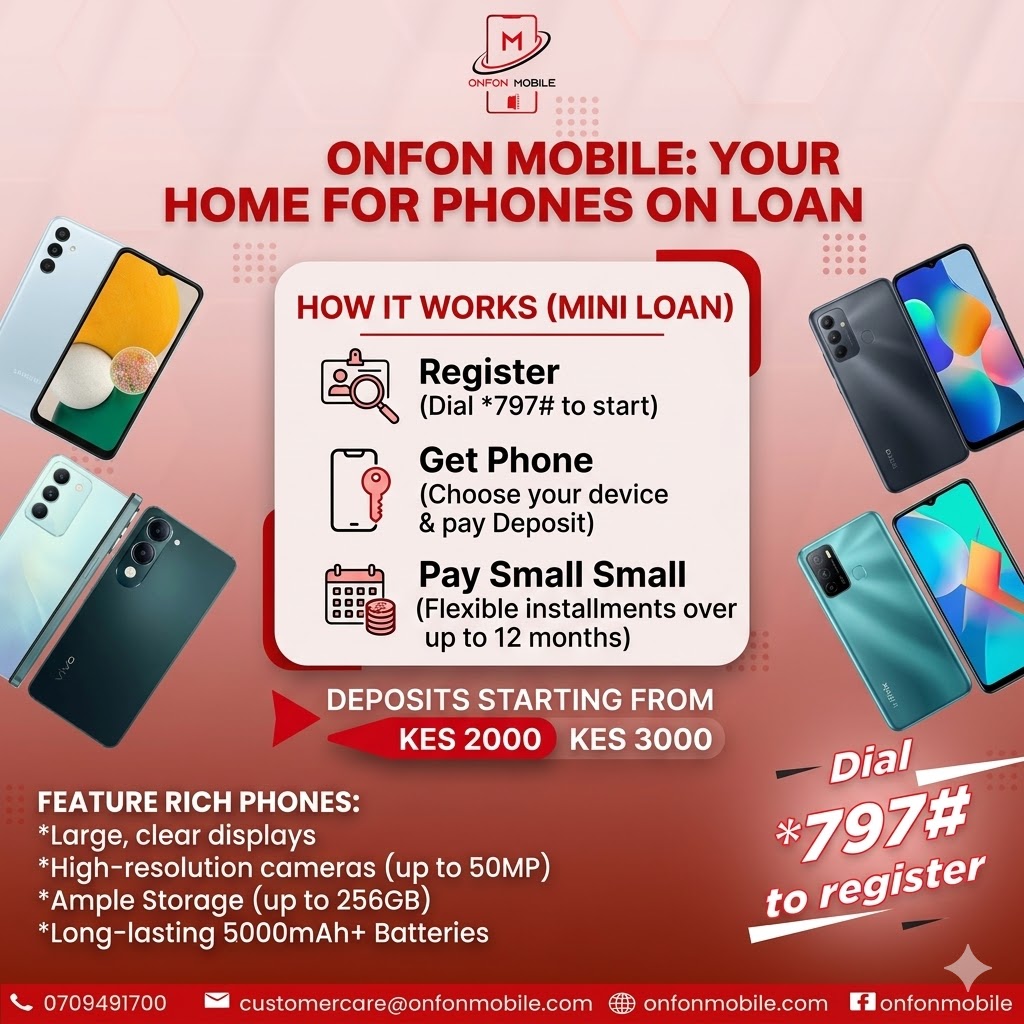
What is OnFone Mini Loan?
The OnFone Mini Loan is a short-term digital loan offered by Onfon Mobile. It is designed as a reward facility for customers who have consistently repaid their smartphone financing loans on time.
This means:
- It is not a general public loan
- It is only available to existing OnFone customers
- Qualification depends on your repayment history and usage behavior
Eligible customers can access instant cash loans ranging from KSh 2,000 to KSh 5,000, directly through their mobile line.
Who Qualifies for OnFone Mini Loan?
To qualify for the OnFone Mini Loan in Kenya, you must meet specific criteria:
✔ Loyal OnFone Customer
You must already be using an OnFone-financed device.
✔ Excellent Repayment History
Customers who consistently pay their daily or scheduled installments on time are prioritized.
✔ Active Usage
Regular use of your line, including transactions via M-PESA, increases your chances of eligibility.
✔ Good Credit Behavior
The system evaluates your reliability based on past payment discipline.
Important: The better your repayment track record, the higher your chances of unlocking this loan feature.
OnFone Mini Loan Limits
The loan is intentionally kept small to remain manageable and low-risk.
- Minimum Loan Amount: KSh 2,000
- Maximum Loan Limit: KSh 5,000
These limits may vary slightly depending on your credit profile and loyalty score.NB: This can change anytime.
How OnFone Mini Loan Works
The process is simple and fully mobile-based:
1. Eligibility Check
Qualified users are automatically identified by the system. You may receive a notification or prompt via USSD *797# follow prompts to check limits and apply.
2. Loan Request
Once eligible, you can request the loan directly through your phone.
3. Instant Disbursement
Funds are typically sent instantly via M-PESA.
4. Repayment
Repayment terms are short and structured, ensuring you maintain your good standing.
Key Benefits of OnFone Mini Loan
Reward for Loyalty
This loan is a recognition of responsible customers, not just a credit product.
Quick Access to Cash
Get emergency funds instantly without lengthy applications.
No Paperwork
Everything is automated—no need for bank statements or physical forms.
Builds Financial Discipline
Encourages consistent repayment behavior and responsible borrowing.
Important Considerations
While the OnFone Mini Loan is convenient, you should keep the following in mind:
- Strict Eligibility: Only available to select customers
- Short Repayment Period: Requires timely repayment to maintain eligibility
- Limited Loan Amount: Designed for small, emergency needs—not large expenses
Failure to repay on time may affect your future access to both the mini loan and other OnFone services.
Why OnFone Mini Loan Stands Out
What makes the OnFone Mini Loan unique is its loyalty-based approach. Instead of offering credit to everyone, Onfon Mobile focuses on rewarding trust and consistency.
This model:
- Reduces default risk
- Encourages responsible borrowing
- Builds long-term customer relationships
Final Verdict
The OnFone Mini Loan is an excellent option for customers who have proven their reliability. With loan limits ranging from KSh 2,000 to KSh 5,000, it serves as a quick financial boost for emergencies or short-term needs.
If you are an OnFone customer, the best way to unlock this benefit is simple:
Pay on time, stay consistent, and build a strong repayment history.
For loyal users, this loan is more than just credit—it’s a reward.
Yeah
That’s true great work