In a landmark decision in late December 2025, the High Court of Kenya has ruled against Jayesh and Ninaa Shanghavi, the founders of the Good Earth Group, effectively clearing the way for Victoria Commercial Bank (VCB) to recover a multi-million shilling loan that the Shanghavis had failed to repay. This ruling, which concludes a protracted four-year legal battle, has wide-reaching implications not only for the Nyama Mama restaurant chain but also for the broader business community in Kenya. The dispute highlights the complex nature of business loans, corporate guarantees, and the legal intricacies involved when businesses default on their financial obligations.
The Origins of the Dispute
The dispute between the Shanghavis and Victoria Commercial Bank dates back to 2021 when the bank accused the couple, directors of the Good Earth Group, of obtaining a KSh 520 million loan under fraudulent pretenses. The bank’s central claim was that the Shanghavis had secured the loan by offering an apartment at the Crystal Edge development as collateral. However, VCB alleged that the apartment was never properly registered as security, despite assurances to the contrary.
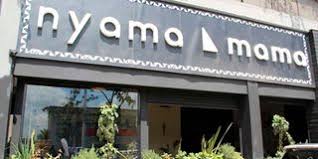
The accusation led to criminal charges being filed against the Shanghavis. These charges, which were a significant blow to the high-profile business owners, were eventually dropped by the Director of Public Prosecutions (DPP) in July 2024. The DPP concluded that the matter was a civil dispute and not a criminal one, thus removing the criminal aspect of the case. This legal shift provided the Shanghavis with an opportunity to counter-attack, and they subsequently filed a KSh 2 billion counter-suit against the bank. The suit was based on claims of malicious prosecution and the damage to their reputations, which they argued had been caused by the criminal charges.
The Bank’s Response and the Civil Legal Battle
Despite the withdrawal of criminal charges, the Good Earth Group‘s legal troubles were far from over. In fact, the withdrawal of the charges only intensified the legal conflict. In a move aimed at halting the bank’s efforts to recover the loan, the Shanghavis sought an injunction that would prevent Victoria Commercial Bank from seizing their assets or auctioning off properties related to the loan until the damages suit had been resolved.
This move, however, was struck down by the High Court in late December 2025. The judge presiding over the case ruled that the Shanghavis had failed to establish that they would suffer “irreparable harm” that could not be compensated through financial damages. This decision marked a major victory for Victoria Commercial Bank, as it allowed them to proceed with efforts to recover the debt, which has remained outstanding for years.
The court’s ruling is crucial in understanding the nature of financial disputes involving large commercial loans. The decision reinforced the principle that borrowers cannot indefinitely delay the recovery of an undisputed portion of a debt by invoking separate civil disputes or claims of wrongful actions by lenders.
The Financial Collapse of Nyama Mama
The saga of the Nyama Mama restaurant chain, which had once been a favorite for Nairobi’s food lovers, mirrors a wider trend of businesses struggling to survive in the wake of the COVID-19 pandemic. According to the Shanghavis, the pandemic led to a 90% drop in revenue, which severely affected their ability to service the loan they had taken from VCB. This financial strain, combined with what they describe as mismanagement by their bank, left the business teetering on the brink of collapse.
However, VCB contends that the financial difficulties of the Shanghavis were not solely due to the pandemic. The bank argues that the real issue was the breach of security agreements, particularly the failure to register the Crystal Edge apartment as collateral. In other words, the financial mismanagement of Nyama Mama, and not just the pandemic, was a major factor in the business’s inability to honor its obligations.
In February 2022, the Good Earth Group was placed under administration, a legal process that helps businesses struggling with debts to restructure and repay creditors. However, the fact that the Shanghavis’ business is still embroiled in legal proceedings makes it unclear whether the company will ever return to its former glory.
The Path Forward for Victoria Commercial Bank
With the injunction dismissed, Victoria Commercial Bank is now legally authorized to pursue the recovery of the loan. This means the bank can take action against any assets used as collateral, including the aforementioned apartment in the Crystal Edge development, and any other properties associated with the loan.
For the bank, this ruling is significant not only because it clears the way for debt recovery but also because it sends a message about the need for corporate accountability in loan agreements. Banks, in particular, are likely to view the ruling as a validation of their right to pursue debts aggressively, even in the face of ongoing civil suits or reputational damage claims from borrowers.
The Shanghavis’ Last Line of Defense
While the court has cleared the way for VCB to begin the recovery process, the Shanghavis still have a multi-billion shilling lawsuit pending against the bank. This suit, which seeks compensation for malicious prosecution and reputational damage, remains their last defense in trying to salvage the remnants of the Good Earth Group empire. If successful, this counter-suit could potentially provide the Shanghavis with the funds needed to restructure their business or settle their debt with the bank, although the outcome remains uncertain.
Despite their current financial difficulties, the Shanghavis’ track record in the Kenyan restaurant and hospitality industry is well-established, with Nyama Mama being one of the most iconic restaurant chains in Nairobi. However, the question remains whether they can rebuild from the financial and reputational damage caused by these protracted legal battles.
Implications for Kenyan Businesses
This case highlights several key issues relevant to Kenyan businesses. First, it underscores the importance of clearly structured loan agreements and the need for businesses to fulfill all security obligations to avoid legal complications. Second, the ruling serves as a reminder that while businesses may experience setbacks, including financial crises like the COVID-19 pandemic, they cannot indefinitely avoid fulfilling their financial obligations.
Additionally, the legal battle between Victoria Commercial Bank and the Shanghavis also raises questions about the role of the banking sector in supporting businesses through difficult times. While banks are often seen as essential partners for businesses, their pursuit of debts can sometimes exacerbate already fragile financial situations. In this case, the tension between the Shanghavis and the bank illustrates the complex nature of these relationships.
The High Court’s ruling in favor of Victoria Commercial Bank represents a significant moment in the ongoing saga of Nyama Mama and the Good Earth Group. While the bank is now free to proceed with recovering its loan, the Shanghavis’ battle is far from over, with their KSh 2 billion counter-suit still pending. As Kenya’s business landscape continues to evolve in the wake of the pandemic, the outcome of this case may serve as a cautionary tale for other entrepreneurs navigating the intersection of business risk, legal responsibility, and financial survival.