Beginning July 1, 2026, major changes to federal graduate student loans take effect, significantly changing how graduate and professional students finance their education. One of the biggest changes is the elimination of the Grad PLUS Loan program for most new borrowers.
Under the new federal borrowing rules, graduate students will face annual and aggregate borrowing limits on Direct Unsubsidized Loans. While professional degree students receive higher borrowing limits than students in standard graduate programs, all borrowers are now subject to an overall lifetime federal student loan cap.
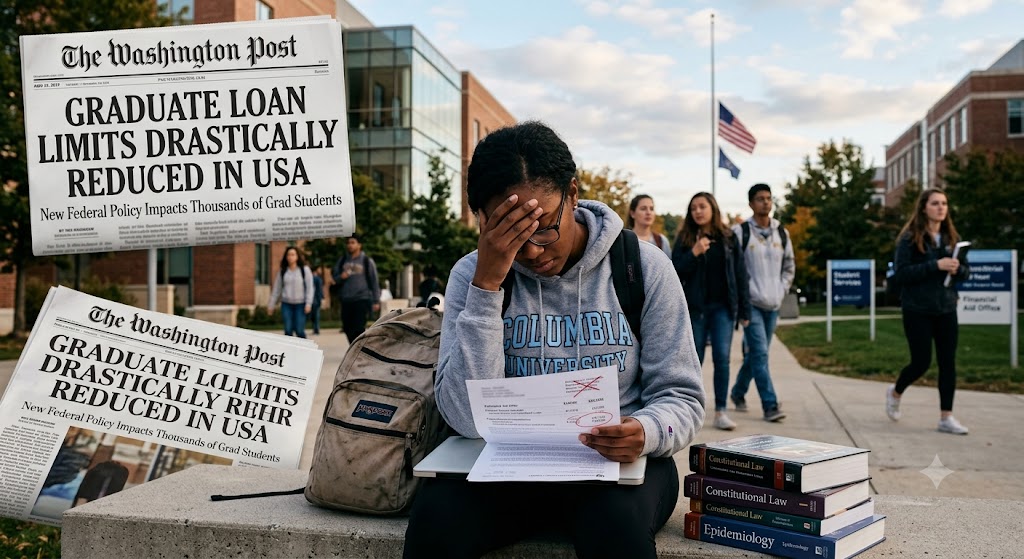
This guide explains the 2026 federal graduate student loan limits, who is affected, borrowing limits by program type, grandfathering exceptions, and strategies to cover education costs.
What’s Changing for Graduate Student Loans in 2026?
For academic periods beginning on or after July 1, 2026, the federal government introduces several significant changes:
Grad PLUS Loans are eliminated for most new graduate borrowers.
Annual borrowing limits are imposed on Direct Unsubsidized Loans.
Aggregate borrowing limits are reduced.
A lifetime federal student loan limit applies across eligible programs.
Certain existing borrowers may qualify for grandfathering protections.
These changes primarily affect students beginning graduate or professional programs after the effective date.
Federal Graduate Student Loan Limits for 2026
The borrowing limits depend on whether you’re enrolled in a standard graduate program or a professional degree program.
- Standard Graduate Programs
Examples include:
Master’s Degrees (MA, MS, MBA)
Graduate Certificates
Doctoral programs (unless classified as professional degrees)
Annual Direct Unsubsidized Loan Limit
$20,500 per academic year
Graduate students cannot borrow more than this amount annually through the federal Direct Unsubsidized Loan program.
Aggregate Federal Loan Limit
$100,000
This is the maximum combined amount of subsidized and unsubsidized federal loans allowed for eligible graduate study under the applicable aggregate cap.
Lifetime Federal Student Loan Limit
$257,500
Regardless of program changes, borrowers cannot exceed a total lifetime federal loan balance of $257,500 across eligible federal student loans.
Grad PLUS Loans
Eliminated for new borrowers.
Students entering graduate school after the new rules take effect generally cannot rely on Grad PLUS Loans to cover remaining educational expenses.
- Professional Degree Programs
Professional degree programs receive higher borrowing limits due to their higher educational costs.
Examples include:
Juris Doctor (JD)
Doctor of Medicine (MD)
Doctor of Osteopathic Medicine (DO)
Doctor of Pharmacy (Pharm.D.)
Doctor of Veterinary Medicine (DVM)
Other qualifying professional programs
Annual Direct Unsubsidized Loan Limit
$50,000 per academic year
Professional students may borrow substantially more each year compared to students in standard graduate programs.
Aggregate Loan Limit
$200,000
Professional students may borrow up to $200,000 in qualifying federal subsidized and unsubsidized loans, subject to federal rules.
Lifetime Federal Loan Limit
$257,500
Even professional students remain subject to the same lifetime federal borrowing cap.
Grad PLUS Loans
Eliminated for new borrowers.
Professional students will no longer have unlimited federal borrowing through the Grad PLUS program unless they qualify under an exception.
Graduate Student Loan Limits at a Glance
Program Type Annual Direct Unsubsidized Limit Aggregate Loan Limit Lifetime Federal Loan Limit Grad PLUS Availability
Standard Graduate Programs $20,500 $100,000 $257,500 Eliminated for new borrowers
Professional Programs $50,000 $200,000 $257,500 Eliminated for new borrowers
What Is the Lifetime Federal Loan Limit?
One of the most important additions is the $257,500 lifetime federal student loan limit.
This means borrowers cannot exceed $257,500 in total eligible federal student loans over their educational career, regardless of:
Multiple graduate degrees
Professional degrees
Returning to school later
Combining undergraduate and graduate federal loans (subject to applicable federal counting rules)
Students planning multiple advanced degrees should carefully monitor their cumulative borrowing.
Elimination of the Grad PLUS Loan Program
For years, Grad PLUS Loans allowed graduate students to borrow up to the full cost of attendance after other financial aid was applied.
Beginning with academic periods starting July 1, 2026, this option is no longer available for most new borrowers.
Without Grad PLUS Loans, students may need to consider alternative ways to finance education, including:
Scholarships
Fellowships
Assistantships
Employer tuition assistance
Institutional aid
Private education loans (where appropriate)
Personal savings or payment plans
Grandfathered Borrowers: Who Can Still Access Grad PLUS?
Not every student loses access immediately.
A limited grandfathering provision allows certain students to continue using the Grad PLUS program.
A borrower may qualify if they:
Previously received federal loans,
Were enrolled in the same academic program, and
Attended the same institution before June 30, 2026.
Students who meet these requirements may continue to receive Grad PLUS Loans under the applicable grandfathering rules, subject to federal eligibility requirements.
Students changing schools or switching to a different graduate program may not qualify for this exception.
Why These Changes Matter
Graduate education often costs significantly more than undergraduate education.
Without unlimited Grad PLUS borrowing, students must plan finances more carefully.
Potential impacts include:
Increased reliance on scholarships.
Greater demand for employer tuition reimbursement.
More students seeking graduate assistantships.
Increased comparison shopping between graduate programs.
More careful budgeting before enrollment.
Students pursuing expensive professional degrees may be affected the most.
How Graduate Students Can Prepare
To reduce financial stress under the new borrowing limits, students should:
Apply for Scholarships
Many graduate-specific scholarships remain underutilized each year.
Seek Graduate Assistantships
Teaching and research assistantships often provide:
Tuition reductions
Monthly stipends
Health insurance benefits
Compare Program Costs
Tuition can vary dramatically between universities. Comparing total program costs may reduce borrowing needs.
Consider Employer Tuition Assistance
Many employers now offer tuition reimbursement for graduate education.
Create a Borrowing Plan
Estimate:
Tuition
Living expenses
Books
Fees
Transportation
Then determine how much must actually be borrowed each year.
Frequently Asked Questions
Are Grad PLUS Loans completely eliminated?
They are eliminated for most new borrowers beginning with academic periods starting on or after July 1, 2026. Some continuing students may qualify under grandfathering provisions.
What is the graduate student loan limit in 2026?
For standard graduate programs, the annual Direct Unsubsidized Loan limit is $20,500.
For professional degree programs, the annual limit is $50,000.
What is the aggregate federal loan limit?
Standard graduate programs: $100,000
Professional programs: $200,000
What is the lifetime federal borrowing limit?
Eligible borrowers are subject to a $257,500 lifetime federal student loan limit.
Who qualifies for the Grad PLUS grandfather rule?
Students who borrowed federal loans for the same program at the same institution before June 30, 2026, may qualify for continued access to Grad PLUS Loans under the applicable exception.
Final Thoughts
The 2026 federal graduate student loan reforms represent one of the most significant changes to graduate education financing in recent years. By eliminating unlimited Grad PLUS borrowing and introducing stricter annual, aggregate, and lifetime loan limits, the new rules encourage students to plan more carefully for the cost of advanced education.
Prospective graduate and professional students should evaluate program costs, maximize scholarships and assistantships, explore employer-sponsored tuition benefits, and understand how the new borrowing caps may affect their long-term financial plans. Those who were already enrolled and borrowed before June 30, 2026 should also determine whether they qualify for the grandfathering exception, which may preserve access to the Grad PLUS program under limited circumstances.