The Government of Kenya, through the Ministry of Labour and Social Protection, has officially released the Inua Jamii cash transfer funds for the latest payment cycle. As of today, June 5, 2026, thousands of vulnerable beneficiaries across the country have started receiving their stipends.
If you or an elderly relative are enrolled in the Inua Jamii Programme, this detailed guide covers the disbursement details, payment amounts, and how to access the money safely.
Inua Jamii Payment Status: May/June 2026 Update
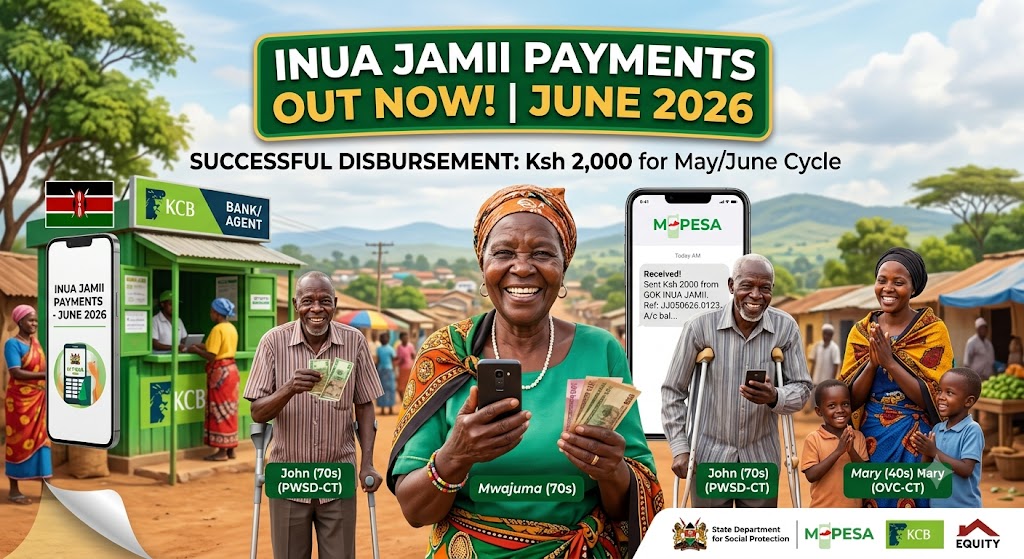
Yes, the Inua Jamii payment for the current cycle is officially OUT.
Disbursements commenced on Friday, June 5, 2026. This follows the government’s established monthly schedule aimed at eliminating long backlogs and ensuring that vulnerable citizens receive continuous financial cushioning against the rising cost of living.
How Much Will Each Beneficiary Receive?
Each registered beneficiary will receive a standard stipend of Ksh 2,000.
Note: The current disbursement covers the May 2026 cycle. Because the government now prioritizes a streamlined monthly disbursement schedule rather than multi-month lumpsum delays, beneficiaries can expect subsequent monthly cycles (like the June cycle) to be processed progressively.
Breakdown of the Inua Jamii Beneficiary Allocation
The national social protection fund continues to be a cornerstone of the government’s strategy to promote human dignity and eradicate absolute poverty. The funds are distributed across key vulnerable demographics:
- Older Persons (OP-CT): Senior citizens aged 70 and above.
- Persons Living with Severe Disabilities (PWSD-CT): Individuals requiring full-time care and support.
- Orphans and Vulnerable Children (CT-OVC): Households fostering vulnerable children to promote education, nutrition, and better health outcomes.
How to Access and Withdraw Your Inua Jamii Funds
To make the distribution process faster, safer, and closer to homes, the State Department for Social Protection has fully embraced digital delivery platforms.
Beneficiaries and caregivers can seamlessly access their stipends through designated avenues:
1. Mobile Money (M-Pesa via E-Citizen)
The government is increasingly utilizing the digital transition model to send cash transfers directly through mobile channels.
- The Code: Registered users can check or trigger updates by dialing the official government service code *222#.
- Withdrawal: Beneficiaries or designated caregivers can visit any authorized M-Pesa agent with their Original National ID card.
- Zero Charges: Under the state framework, these specific welfare withdrawals are intended to be processed without standard commercial transaction fees.
2. Contracted Payment Service Providers (Banks)
For beneficiaries whose accounts are still mapped to traditional commercial banks (such as KCB, Equity, Co-operative Bank, Postbank, and Kenya), funds have been electronically moved to those accounts.
- Older persons covered under the expanded framework do not need to open new accounts if they are already integrated into these respective banking networks.
Safety and Security Tips for Elderly Beneficiaries
With the funds successfully rolled out, beneficiaries and their family members are urged to remain vigilant against fraudsters:
- Beware of Mobile Scams: Do not trust text messages or phone calls from strange numbers claiming they can “speed up” or “unlock” an Inua Jamii payment. The government will never ask you to send money to receive your stipend.
- Guard Your PIN: Never share your M-Pesa PIN, mobile banking credentials, or ATM PIN with strangers at withdrawal points.
- Utilize Local Administration: For any payment delays, registration status queries, or discrepancies, visit your local Sub-County Social Development Office or consult your local Chief/Assistant Chief, who serve as official Inua Jamii ambassadors.
FAQs About Inua Jamii Payments
Q: Can I register for Inua Jamii online? A: Regular updates and listing drives are managed directly by the Directorate of Social Assistance through local community structures and the official Inua Jamii portal. Keep an eye out for open registration windows announced through your local Chief’s barazas.
Q: Are there any transaction deductions on the Ksh 2,000? A: No. The government covers the administrative costs so that vulnerable families can enjoy the full Ksh 2,000 cash transfer to meet basic needs like food and medication.
I am annah mueni muli yet to receive payment from April may and June what could be the course?
Type here..we have not receive intua jamii money for wore than 3 months